
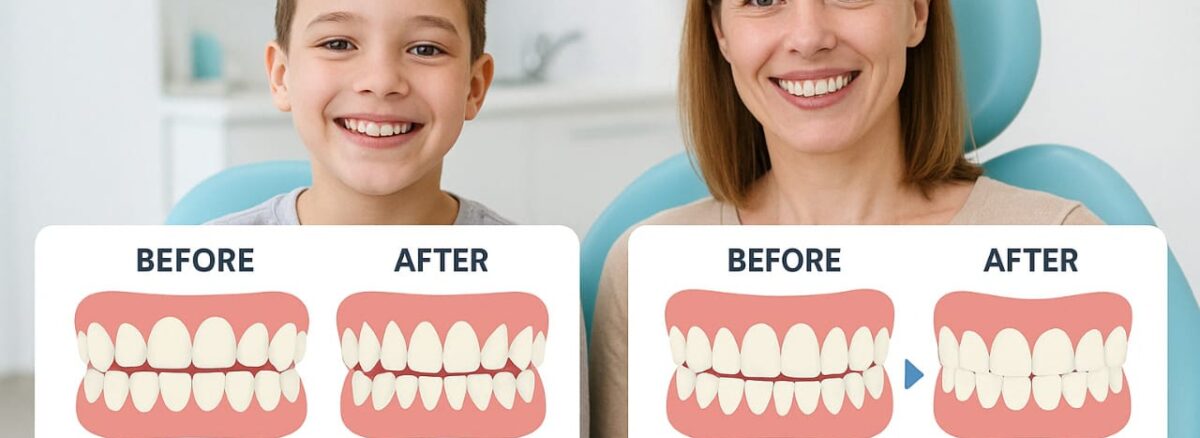
Orthodontic treatment is no longer limited to teenagers; many adults today benefit from braces as well. But how do you know if you actually need them? Certain signs can indicate the need for orthodontic correction.
One of the most obvious indicators is crowded or misaligned teeth, which can make brushing and flossing difficult, increasing the risk of tooth decay and gum disease. Gaps between teeth may also suggest that braces could help align them properly.
Another key sign is malocclusion—when the upper and lower teeth don’t meet correctly. This can cause chewing issues, speech difficulties, and sometimes jaw pain.
Children who breathe through their mouths or struggle with chewing may also need early orthodontic attention, especially if they have habits like thumb sucking or tongue thrusting.
Only an orthodontic specialist can determine the best course of action through a comprehensive evaluation.
“Every beautiful smile begins with properly aligned teeth.”
Delaying orthodontic care can lead to longer and more complex treatment. Early evaluations are recommended by age 7, according to the American Association of Orthodontists.
For adults, there’s no upper age limit for braces—as long as the gums and supporting bone are healthy.
Braces not only enhance aesthetics but also improve speech, digestion, and overall oral health.